2026-09-10 ·
How Winter Rains Cause Concrete Settlement in Mission Valley
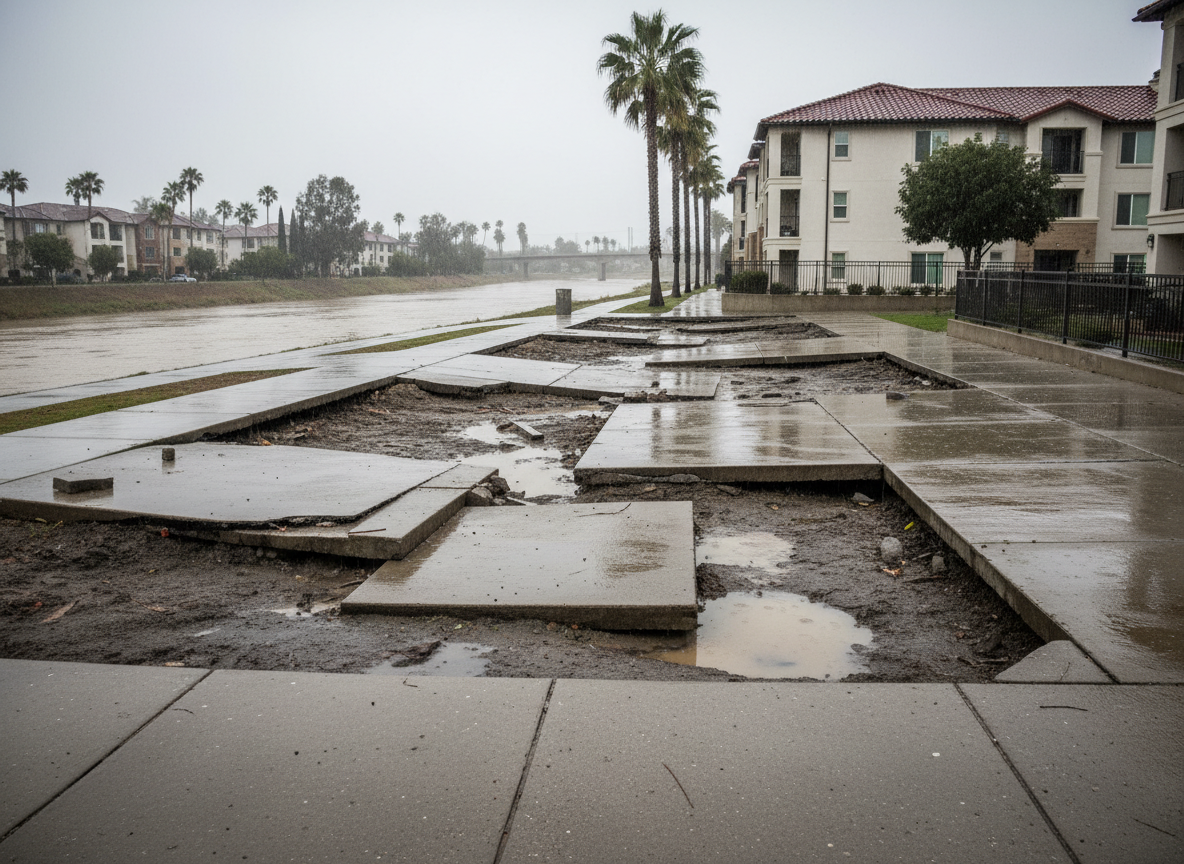
Winter rains cause concrete settlement in Mission Valley when runoff enters slab joints, follows poorly directed drainage, or saturates the supporting soil until it softens or moves. As the ground loses uniform support, driveways, sidewalks, patios, and garage floors can sink or tilt toward the resulting voids. San Diego’s mild coastal Mediterranean climate means long dry periods may conceal the problem; then concentrated winter storms reveal it quickly. Concrete leveling can restore a slab’s position, but the water source and condition of the base must be evaluated first or settlement may continue.
Why Mission Valley Is Vulnerable After Rain
Mission Valley occupies low terrain along the San Diego River, so drainage behaves differently here than on higher ground in North Park or around La Jolla. Water naturally moves downhill, and developed properties add roofs, parking areas, driveways, and other hard surfaces that concentrate runoff. If that flow reaches a slab edge, open joint, or unsealed utility cut, it can soak the material supporting the concrete.
The neighborhood also contains a mix of older apartment properties, commercial sites, and newer multi-unit developments. Older slabs may have separated joints, previous patches, or drainage layouts that no longer match surrounding grades. New landscaping, resurfaced parking areas, and utility work can also change where stormwater travels. Unlike consistently wet regions, San Diego County experiences extended dry spells that can open gaps between soil and concrete. Winter rain then enters those gaps, carries fine material away, and enlarges unsupported areas beneath the slab.
What Happens Beneath a Settling Slab
Concrete is rigid, but the soil and aggregate beneath it are not. Settlement usually develops through a sequence rather than from rain simply making the slab heavier:
- Runoff reaches the slab base. Water enters beside the concrete, through a joint, or from a downspout discharge point.
- Supporting material softens or migrates. Fine particles can move with the water, while poorly compacted fill may compress when saturated.
- A void or weak zone forms. Part of the slab remains supported while another part begins to bridge an empty or softened area.
- The slab drops or cracks. Vehicle loads, foot traffic, and the concrete’s own weight force the unsupported section downward.
This is why a settled panel often tilts toward a joint or outside edge. Sunken concrete repair should address the loss of support, not merely cover the resulting crack. Traditional mudjacking and other lifting methods work by placing material beneath the slab, but suitability depends on slab condition, access, void size, and drainage.
Warning Signs To Check During And After Storms
The best time to understand settlement is while water is moving. From a safe location, watch how runoff crosses the property and where it collects. A low slab may be the result of settlement, but it can also become part of the cause by directing more water toward the same weakened edge.
Look for these practical signs:
- Standing water at control joints or slab edges after nearby surfaces have started drying.
- Downspouts emptying beside concrete rather than carrying water away from the base.
- A height difference between adjoining panels, especially where shoes, strollers, or wheels catch.
- Soil pulling away from a slab edge during dry weather, followed by rapid water entry during rain.
- Cracks that collect sediment, suggesting water has been moving through them.
- Garage or patio doors rubbing after the adjoining slab changes pitch.
Driveways deserve particular attention because vehicles repeatedly load weakened panels. The Kearny Mesa driveway settlement inspection guide offers a useful comparison for checking joints, drainage, and panel movement before arranging driveway leveling.
Why Drainage Must Be Corrected Before Leveling
Lifting concrete without understanding the water path can produce a straighter surface while leaving the original cause untouched. Before leveling, inspect roof runoff, irrigation overspray, landscape grades, trench repairs, and the discharge side of the slab. Water should not be redirected toward a neighboring building, public walkway, or another low section of the property.
The same principle applies across San Diego County, although site conditions vary. Hillside properties in La Jolla may receive concentrated downhill runoff, while flatter parcels in Chula Vista, Coronado, and La Mesa can have different ponding and drainage patterns. Pacific Beach pool decks require particular attention to both stormwater and routine splash-out; readers dealing with that setting can review leveling concrete around pool decks in Pacific Beach.
A sound evaluation separates a surface drainage problem from a deeper support problem. If a slab is badly fractured, structurally tied into another component, or continuing to move, lifting may not be the correct remedy. The goal is stable support and positive drainage—not simply making the top look level.
What Mission Valley Property Owners Should Do Next
Start by documenting the slab before the next storm. Photograph joints, cracks, downspout outlets, and panel edges from consistent angles. During rain, note the direction of flow and mark persistent puddles after conditions are safe. Avoid filling a visible void from the edge with loose soil alone; material placed from the side rarely reaches the entire unsupported area and may hide evidence needed for a proper assessment.
After the storm, check whether the concrete drains away from buildings and whether adjoining panels remain aligned. Small cosmetic cracks do not automatically mean a slab requires lifting, but active elevation changes, recurring ponding, and widening gaps deserve closer evaluation. Downtown San Diego, Mission Valley, North Park, and properties near busy destinations such as Balboa Park, the San Diego Zoo, and the USS Midway Museum all experience different traffic and runoff patterns, so the repair plan must fit the actual site.
San Diego Concrete Leveling is available Mon–Fri, 8am–6pm, and Sat, 9am–2pm. A useful site visit should identify where support was lost, whether the slab can be lifted, and what drainage correction is needed to reduce repeat settlement.