2026-09-10 ·
The Effects of Drought Cycles on Concrete in North Park
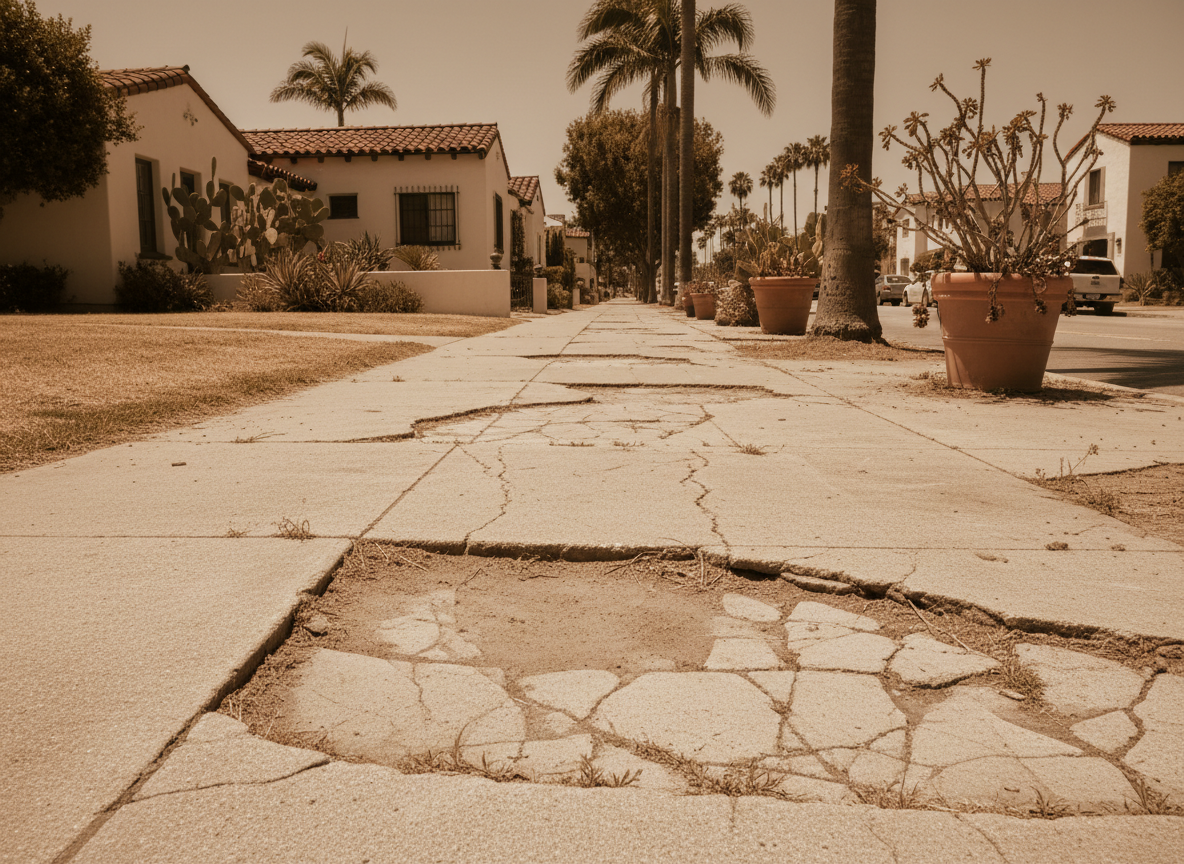
Drought cycles affect concrete in North Park mainly by changing the soil beneath it. During long dry stretches, exposed or poorly irrigated soil can contract; when rain or heavy watering returns, moisture may enter unevenly, soften disturbed ground or move fine material through gaps. The slab above may then settle, rock or crack where support has been lost. San Diego’s mild coastal Mediterranean climate means freeze-thaw damage is not the main concern here—the more common pattern is repeated drying followed by concentrated wetting, especially around driveways, sidewalks, patios and garage approaches.
Why Drought Damage Often Appears After Water Returns
Concrete itself does not normally shrink several inches because San Diego County has gone through a dry period. The movement usually occurs in the supporting soil, old fill or base material beneath the slab. A consistently dry area may appear stable until runoff from a roof, irrigation leak or strong rain reaches one edge and not the other. That moisture difference can create isolated soft spots or carry loose material into an existing void.
North Park properties often combine older concrete, replacement panels, landscape beds and later additions. Each section may sit on a different base, so adjacent slabs do not always move together. A driveway panel beside a regularly watered planting strip can behave differently from the panel next to a dry wall or garage. On sloping lots, runoff may also follow the downhill edge of a walkway instead of soaking uniformly. This is why settlement sometimes becomes noticeable after rain even though the underlying support changed gradually throughout the preceding dry months.
Concrete Problems To Watch For In North Park
Drought-related movement rarely presents as 1 unmistakable type of damage. Inspect the whole slab and the surrounding drainage rather than focusing only on the most visible crack. Useful warning signs include:
- A vertical offset of about 1/2 inch or more between adjoining sidewalk or patio panels
- A hollow sound when tapping near a settled edge
- Water collecting against a garage, porch or foundation after washing or rain
- A slab that rocks when weight crosses a corner
- Cracks that widen toward a control joint or unsupported edge
- Soil pulling away from the side of a driveway during prolonged dry weather
A thin, level surface crack may be primarily cosmetic, while a narrow crack with vertical displacement suggests movement below. If the concern is a public-facing walkway, the guide to checking sidewalks for trip hazards near Balboa Park offers a practical inspection routine. Photograph questionable areas with a ruler in view, then compare the same points after the next irrigation change or rain.
How Landscaping And Drainage Intensify The Cycle
North Park’s mature streetscape creates frequent transitions between concrete, tree wells, small yards and narrow side passages. Roots may affect some slabs, but it is a mistake to blame every raised or sunken panel on a nearby tree. The direction of displacement matters: root pressure commonly lifts a localized area, while loss of base support more often leaves a low edge, rocking corner or bowl-shaped depression.
Irrigation can also create sharper moisture differences than seasonal rain. A broken emitter beside 1 driveway panel, a downspout emptying at a joint or water draining from a planter can repeatedly saturate the same location. Meanwhile, the opposite side stays dry. Keep discharge away from slab joints and correct leaks before leveling; otherwise, the repaired elevation may not remain stable. Where drainage must cross concrete, the intended slope should move water away from buildings without creating a low pocket. After a repair, concrete sealing may help limit surface water entry through joints and cracks, but sealer cannot rebuild missing support beneath a slab.
When Concrete Leveling Or Mudjacking Makes Sense
Concrete leveling is most suitable when a slab remains structurally usable but has settled because voids or weak areas developed beneath it. The process raises the low section and restores support from below. Mudjacking is 1 leveling method that pumps a cementitious slurry through drilled access holes; suitability depends on slab condition, access, void size and what lies beneath the concrete.
Leveling is not the right response to every drought-related defect. A panel with widespread crumbling, severe heaving, extensive structural cracking or insufficient room to return to grade may require partial or full replacement. Drainage defects must also be addressed rather than hidden. For a driveway, compare the garage threshold, sidewalk and street approach before choosing a target elevation; raising 1 panel without considering all 3 can redirect water. Property owners evaluating a settled approach can review the scope of driveway leveling. For patios and porches, door clearances, wall flashing and adjacent drains are equally important constraints.
A Practical Inspection After Dry Weather And Rain
Start during a dry period by walking each joint and marking low corners with removable chalk. Place a straight board across adjoining panels to make vertical offsets easier to see, and note any soil gaps along exposed slab edges. Do not pack those gaps casually with loose topsoil; it may conceal a deeper void without providing reliable structural support.
Inspect the same route again after irrigation runs or meaningful rain. Look for sediment exiting at joints, fresh ponding, damp bands along slab edges and water entering old cracks. Around patios and pool areas, keep drainage observations separate from splash-out; the article on leveling concrete around pool decks in Pacific Beach explains the additional issues near recreational water. These checks are useful beyond North Park as well. Mission Valley’s low-lying settings, La Jolla’s slopes and properties in Chula Vista or La Mesa can experience different runoff paths, even under the same broad San Diego County weather pattern.
Reducing Future Movement Without Overwatering
The goal is consistent moisture management, not soaking the ground beside concrete after months of drought. Repair irrigation leaks promptly, avoid directing sprinklers into slab joints and extend roof discharge to a controlled drainage point where appropriate. Keep joints clear enough to inspect, and replace failed flexible joint material when gaps are allowing water and debris to enter. Do not assume daily watering will stabilize a slab; concentrated water can worsen erosion or soften poorly compacted material.
Recheck elevations when seasons change and before resurfacing, coating or installing tile over exterior concrete. Surface finishes do not correct a moving base, and they can make later leveling more complicated. If a slab has measurable displacement, recurring ponding or a rocking corner, an on-site evaluation can determine whether leveling, mudjacking, drainage correction or replacement is the sensible path. San Diego Concrete Leveling is available Mon–Fri, 8am–6pm, and Sat, 9am–2pm for property owners comparing repair options in North Park and surrounding San Diego communities such as Downtown San Diego, Coronado and La Jolla.